
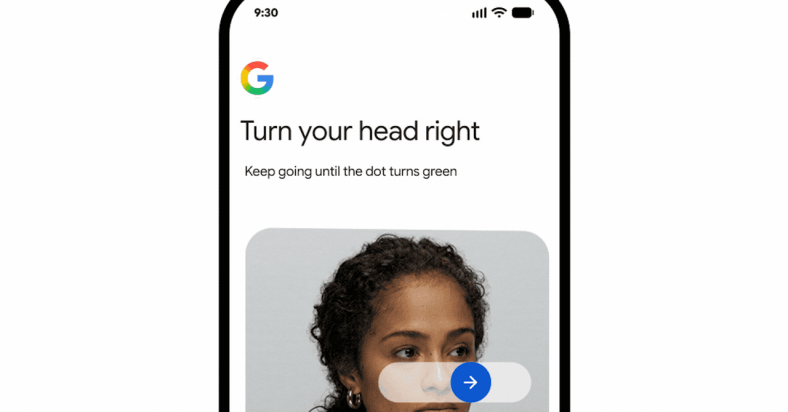
Google has a new way for users to sign in to their accounts: a selfie video.
If you’ve ever lost your device and gotten locked out of your Google account, you know it can feel like a desperate, Kafkaesque process to recover access and get back in—especially for people who run their digital lives, from email messages to calendar appointments, on Google software. This new sign-in option is an additional way to unlock your Google account, like a spare key hidden in the bushes.
“We always recommend that you set up more than one option,” says Claire Forszt, a product manager at Google who focuses on identity and engagement. “Selfie is just the newest option in that list available for users. It’s designed to help specifically in these vulnerable scenarios around not having access to the device where your passkey might be.” Additional sign-in options include using recovery contacts and backup codes.
I was able to set up my selfie video in less than five minutes, and the process was straightforward. Open your Google account and choose the Security & sign-in tab. Then scroll down to the How you sign in to Google section. If the selfie sign-in is currently available for your account, you’ll see it as a new option at the bottom. Google is in the process of rolling this out globally to most accounts.
Courtesy of Reece Rogers
I recorded my selfie video on an iPhone, and Google accepted it on my first attempt. It recommends keeping your face visible and eyes pointed at the camera in standard lighting. It also recommends that you’re the only face seen in the recording; even a family portrait hanging behind you is a no-go. As prompted by Google, I lifted my chin slowly and stared at the ceiling for a second before bringing my head back to the center. Then it asked me to look directly at the camera for one last capture. Finally, it verified the selfie video and stored it under Security Settings.
Google says it’s safeguarding users against deepfake attacks with tools like liveness detection. “There might be instances where passing a selfie video alone may not always be sufficient to get you back into your account if we suspect something risky going on,” Forszt says. “We evaluate the overall risk based on many factors.”
If you decide you want to enable this option, it’s essential to set it up before you need it. “You can’t add a selfie video while you’re locked out of your account or in the account recovery process,” reads Google’s support page for the feature.
Google gives users an option during the selfie video creation process to decide whether to opt in to that recording being used as training data. “Allow Google to use this and any previously provided selfie videos and related data to develop and improve our facial recognition, age estimation, and other verification methods that use your physical features or movement, across Google services,” reads the description next to an optional checkbox. Users can go into their privacy settings later to adjust this setting, labeled Improve Google services, if they change their mind.