Page 2 of 2

3 Amazon Workers Say They’re Under Investigation for Speaking Out About Data Centers

Earlier this month, five current Amazon employees publicly urged Seattle City Council to regulate data centers. It was an unprecedented act of advocacy by tech workers, and now, three of the staffers say they are now under internal investigation for what they understand to be allegedly representing themselves as spokespeople for the company without prior approval. “It’s a totally ridiculous claim,” says one of the affected employees, Patrick Schloesser. “It’s patently absurd.”

The three software engineers, who work in different divisions of Amazon and all live in Seattle, believe they are being unfairly targeted for expressing their political beliefs. They filed a joint complaint on Thursday to Seattle’s Office for Civil Rights, according to the employees and a filing seen by WIRED. They accused Amazon of illegally attempting to intimidate and retaliate against them for expressing their personal opinion outside of work about the need to regulate the environmental and social impacts of data centers.

“Seattle is one of just a few jurisdictions in the country that prohibits private employers from discriminating against their employees based on the political beliefs they hold and the organizations they belong to,” says Abby Lawlor, an attorney at Barnard Iglitzin & Lavitt who is advising the employees. “Here, we have legal tools to fight back and ensure that tech workers can be full democratic participants in these important local discussions. We hope the city of Seattle will do its part to ensure that this vital Seattle law is enforced.”

Amazon and the Seattle civil rights office did not immediately respond to requests for comment. Margaret Callahan, an Amazon spokesperson, previously told WIRED that the company respects employees’ right to voice their opinions and that it tries to be a responsible steward in the communities where it operates.

The Amazon employees took to the city lectern to advocate for various regulations that Seattle is considering imposing on data centers. Amazon doesn’t have a current or proposed data center in the city, but several other companies have put forth plans for new projects.

The employees who say they are under investigation—Darius Irani, Liesel Wigand, and Schloesser—tell WIRED they were each separately called into virtual meetings with an Amazon employee relations staffer last Wednesday. They were told an investigation may take one to two weeks and have received no updates so far, besides being directed to use a speaker registration form that they don’t feel applies to the personal comments they made. Schloesser recalls being told the probe could lead to being fired.

The three workers contend Amazon has a pattern of trying both to silence collective action by workers, including at its warehouses, and dodging public criticism of data centers by using confidentiality agreements and other tactics to shield the projects from some scrutiny. The affected workers say they have received numerous messages of support from colleagues and no internal criticism, aside from in the meetings with HR.

In remarks during public comment periods at three city meetings this month, the workers identified themselves as members of Amazon Employees for Climate Justice, a collective of thousands of current and former workers at the tech giant that has long advocated for the company to better address its role in contributing to climate change.

The employees did not say they were speaking on behalf of the company, which to their knowledge didn’t make any formal comment about the data center measure at issue. Two other Amazon workers who spoke at later city council meetings say they have not received notice that they are under investigation.

Schloesser, who has been at Amazon for about six years, and Irani, who has more than five years at the company, say they felt compelled to join the growing nationwide movement against unfettered data center construction for their own reasons and believe no reasonable person could have interpreted their remarks as representing Amazon.

Samsung The Frame Pro 2026 Review: Pricey But Worth It

On the Netflix show Legends, AI processing was used to enhance a dimly lit office scene to bring up the contrast. I had a similar experience watching scenes from Awake on Netflix, which takes place mostly at night. I could still see the main characters even in darker areas of the scene. YouTube videos of WIRED interviews looked clear and colorful as well. In comparison, low-cost televisions seem more like a computer display with stark bright colors playing the same clips.

Samsung also leveraged AI to improve sound quality. In time for the World Cup, Samsung’s new AI audio feature helps enhance the volume of the broadcaster voices while lowering distracting crowd noises when watching soccer matches. For movies, the AI Sound Controller Pro sliders can help boost voices and reduce the volume of background music, but the experience is still buggy. While I could adjust the sliders, they’d always revert back to the default settings. Still, with Dolby Atmos support, I found myself immersed in the experience as audio emanated from around the room when watching Unbroken.

There were also several glitches I’ve noticed in testing. AirPlay worked fine, but when trying to use Google Cast to stream Alien: Romulus on HBO Max from my Android phone, an error occurred. Cloud gaming on GeForce NOW also presented with a bug that prevented me from authenticating with the service. Samsung reps are looking into these issues.

Despite the bugs, I’m convinced that The Frame Pro is a capable gaming display. Gamers looking to connect a console or gaming PC can use the Mini HDMI port on the rear of the television or the Wireless One Connect box. Both support refresh rates up to 240 Hz. I’m not a competitive gamer, so I stuck with the breakout box to connect my PC. I was amazed at Crimson Desert’s stutter-free performance. Everything looked rich and vibrant—there were also no delays using an Xbox controller.

I also tested the Aphelion using the Xbox Cloud Gaming app for console-free gaming. Other than slight stuttering due to lag, it all worked fine. Senua’s Saga: Hellblade II, a game that typically looks washed out on some competing TVs and projectors, appears vibrant on the screen.

The Frame Pro 2026 is an exceptional art television, and it’s among the best I’ve tested. Improvements to the Tizen OS, matte finish with anti-glare coating, and AI enhancements make it even more appealing. My only slight pause is the price. The Amazon Ember Artline also looks stunning and costs about $900 less. But The Frame Pro is the one you want for absolute realism and vivid colors.

Waymo Recalls Robotaxis Over Risk They’ll Drive at Speed Into Freeway Construction Zones

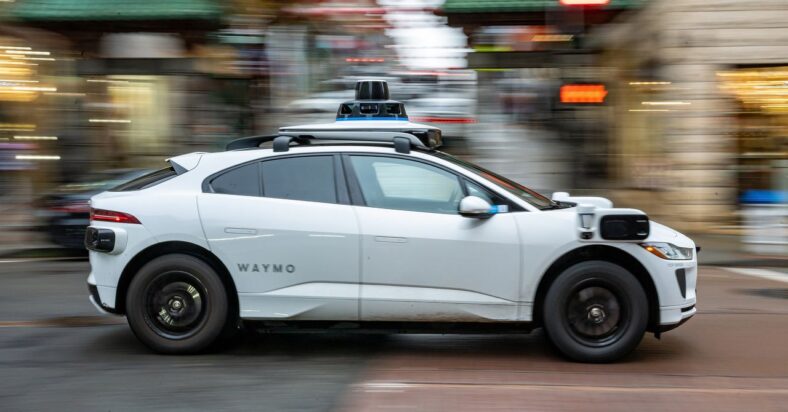
Waymo has filed its fourth safety recall since February 2024, after its driverless cars were caught entering closed freeway construction zones.

The recall, filed with the National Highway Traffic Safety Administration (NHTSA) on June 17, appears to affect Waymo’s entire US fleet, covering 3,871 vehicles running Waymo’s 5th Generation automated driving system (ADS).

NHTSA estimates 100 precent of the affected units carry the defect, which is outlined in the filed safety recall report as “under certain circumstances, the AV may enter and drive at speed in freeway construction zones due to inappropriately prioritizing the avoidance of other freeway hazards and/or failing to recognize the construction zone.”

Waymo started offering highway rides in late 2025, and the underlying problem appears to be a failure of priority logic. According to the NHTSA filing, the ADS sometimes failed to recognize construction zones, and in other cases actively chose to drive through them because it was busy avoiding other hazards on the freeway. Both conditions can produce the same outcome: a driverless car at highway speed moving through a closed work zone.

The events that triggered the recall apparently began earlier this year. On April 11 and 19, Waymo vehicles in Phoenix drove past ramp closure signs into pre-planned construction zones. Waymo’s Field Safety Committee responded by restricting freeway operations.

Then, on May 18, seven Waymo vehicles in the San Francisco Bay Area drove between construction cones into active lane closures. Though no collisions or injuries were reported from these events, it was this second cluster that prompted a broader freeway ban by the company. Waymo’s Safety Board reviewed the issue on June 1, and on June 8 decided to issue a formal recall.

“Waymo’s mission is to be the world’s most trusted driver, and the data shows that we’re making roads safer in the communities in which we operate,” said a Waymo statement emailed to WIRED. “We identified an area of improvement regarding performance around freeway construction zones. We voluntarily restricted freeway operations last month while making improvements, proactively notified state and federal regulators, and decided to file a voluntary software recall with NHTSA.”

Crucially, a software fix for this potentially dangerous fault does not yet exist. Indeed, the NHTSA filing notes that a permanent remedy is “currently under development.”

Waymo’s interim response is to restrict all its vehicles from entering freeways entirely, a significant operational restriction for a company that previously offered freeway rides in San Francisco, Los Angeles, Phoenix, and Miami.

However, because Waymo owns every vehicle in its fleet, there are no owners to notify. The fix, when it is programmed, will be pushed out as an over-the-air ADS software update.

This is the fourth time in roughly 28 months that Waymo has had to issue a safety recall. In May 2025, Waymo recalled 1,212 robotaxis over collisions with stationary roadway barriers following a NHTSA preliminary evaluation citing at least seven incidents between December 2022 and April 2024. In May this year, Waymo recalled 3,791 vehicles after a robotaxi drove into a flooded, impassable road in San Antonio and was swept into a creek.

This latest recall does not affect Waymo’s newest 6th Generation vehicles, apparently, and the company’s cars will continue to operate service on surface streets in the US.

The 10 Best Essential Oil Diffusers We’ve Tried in 2026 (and 2 to Avoid)

I first learned about Pura from a friend whose house always smelled like a high-end boutique under every circumstance. Cooking project, water leak … no matter what was going on in her house at the time, I only ever smelled berries. I have two cats and a multi-sports-playing teen—I knew I needed this. Now, after having owned multiple Puras for over two years, I have some thoughts.

While my Pura journey began with the now-discontinued Pura 3, I have also since tested the Pura 4 and large-room Pura Plus, both of which have dual bays for two of Pura’s proprietary oil cartridges, as well as the Pura Mini. The Pura 4 and Mini both plug into an outlet and can only be controlled through the accompanying app (or Alexa or Google Home). This is convenient for setting schedules and timers, switching fragrances (or using the handy new auto-alternate feature), and changing the color of the optional night-light, but there have also been numerous occasions where I’ve wanted to stop or start or change a schedule but have been unable to because I forgot my password or the diffuser couldn’t connect to Wi-Fi. In the moment, it was infuriating. Mercifully, the stand-alone, cylindrical Pura Plus has on/off manual control buttons on the front. The smaller Pura 4 and Mini are best for enclosed spaces, like a long entryway for the former or a small bedroom for the latter (note that all Puras only work with 2.4-Ghz Wi-Fi). If you have high ceilings or any kind of open floor plan, you’ll get better results from the Pura Plus. Just note that, unlike the silent Pura 4 and Mini, the Plus emits an audible whooshing sound—32 decibels, about as loud as a fan on low.

Perhaps the best feature of the Puras, however, is the brand’s extensive library of scents from companies like Anthropologie, Nest, Capri Blue, and more. (Including luxe seasonal releases—spring offerings include Studio McGee Violet Fig, Brooklyn Candle Studio Tulum, and Otherland Chandelier, among many, many others.) The quality and duration can vary quite widely, and they’re not cheap—$11 all the way up to $34, for 0.33 ounces—but most of them smell better than cartridges from any other diffuser brand I’ve tried, and all come with a 30-day money-back guarantee. Because of the small size and price of the cartridges, Pura might not be the best choice if you want to smell diffuser all day, every day, as you’ll end up spending a small fortune. However, if you love unique luxury scents and only need them occasionally and/or on demand, Pura is the way to go. —Kat Merck

TypeNebulizerAdditional FeaturesSmart features (requires 2.4-GHz Wi-Fi), night-lightOil TypeProprietaryRemote?No

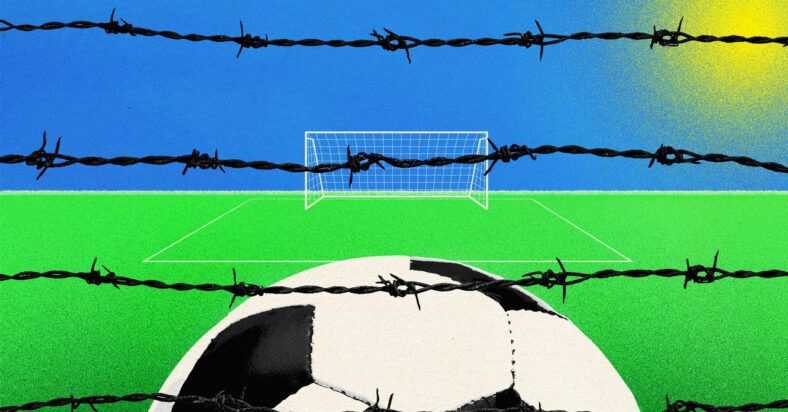
Locked Out of the World Cup: A Year Marked by Barriers, Borders, and Broken Access

For the first time in World Cup history, eight Arab nations have qualified for this year’s tournament, including Morocco, Tunisia, Egypt, Algeria, Saudi Arabia, Qatar, Iraq, and Jordan—double the number of teams that qualified for Qatar in 2022.

Yet, the tournament is taking place at an unprecedented moment of heightened geopolitical tension. The US-Israel war with Iran, which began in February of this year, has caused ripple effects across Gulf states and neighboring countries in the Levant, including Lebanon, Palestine, and Jordan, reshaping the security around travel and mobility for fans and players hailing from the region.

The US State Department has fully suspended visa issuance for nationals from countries with teams that qualified, including Iran and Haiti—despite it being the first time Haiti has qualified for a World Cup since 1974. Just a week before the tournament began, the Iranian Football Federation, according to Reuters, reported that thousands of fans had their tickets revoked; before that, the US ruled that Iranian players and staff would have to commute to the US from Mexico on days the team has matches on American soil.

Iran is the most visible example, but it is far from the only one. The head of the Palestinian Football Association was denied entry into the US, while fans in Morocco have had their visas denied, with many losing money spent on travel costs.

​“For other Middle Eastern countries, while they may not be outright banned, they face a steeper hill to climb depending on the country,” says Talib Visram, an independent reporter who has been closely covering this year’s World Cup through his Substack “America’s Cup,” where he has spent months interviewing experts and tracking the build-up to the tournament.

​“Fans of nations like Jordan—one of the debutants—had to apply for visas many months in advance. While those wait times were later expedited, there was a reported denial rate of more than 40 percent,” he adds.

​Similar barriers have emerged across Africa. Fans from the Ivory Coast and Senegal have been met with reported visa rejections, while a Somali referee with an approved US visa was denied entry when he landed in Miami, underscoring how official approval to travel does not necessarily guarantee admission at the border.

In addition to visa barriers, fans from Ivory Coast, Senegal, Tunisia, and Algeria also faced the possibility of US entry bonds as high as $15,000 going into the tournament. In May, the State Department moved to waive the bond requirement for visitors coming into the country for the World Cup, but only if they’d purchased official tickets and applied for FIFA’s Priority Appointment Scheduling System (PASS) by April 15. That cutoff date means the waiver may not help many fans.

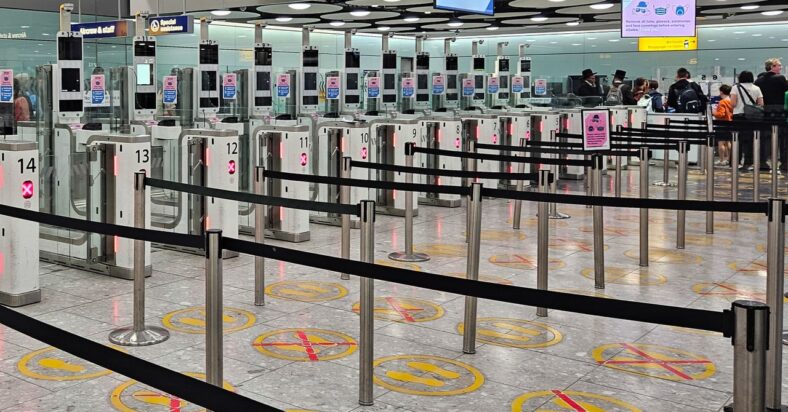
​What sits behind these outcomes is a complex system. While obtaining a US visa is formally the same for all applicants, State Department guidance says applicants can be subject to expanded screening and vetting, including review of social media and online activity. Some cases are then pushed into administrative processing, an open-ended security review that can last weeks or months with no clear timeline. Layered onto that are biometric checks at both the visa and border stage, which can include fingerprinting and facial-comparison technologies, which can add further delays or lead to additional screening even for those with approved visas.

​“We have seen examples of visa-triaging algorithms, automation, all sorts of decisions being made by artificial intelligence kind of behind the scenes, and this is changing the ways that people can enter countries,” says Petra Molnar, a lawyer and anthropologist at the Refugee Law Lab at Toronto’s York University who specializes in the impacts of technology on migration and border crossings. “It’s changing the immigration, detention, and deportation regimes as well.”

The UK Will Scan Asylum-Seekers’ Faces for Age Checks—Despite Knowing the Tech Is Flawed

While the Home Office says face scanning is designed to be an “additional” tool for border officers and won’t “replace or overrule human judgment,” it did not answer questions about how it plans to use the technology in real-world environments. “In cases of uncertainty,” the spokesperson says, “individuals will always be treated as children until a further assessment is conducted.”

Expanding Estimates

The UK government first announced its plans to use face age estimation alongside border staff judgments to assess migrants in July 2025. Since then, the Home Office has delayed the rollout of the systems until 2027, saying it will use the “cutting-edge AI tech” to “crack down on fake claims” with the aim of stopping “adults attempting to game the system.”

Over the past five years, AI face scans have emerged as a key component of controversial online age verification programs, as lawmakers have mandated social media platforms, porn websites, and some retailers check their users’ ages. It has also been trialled at some bars and shops in the UK. Face age estimation works by analyzing the features of someone’s face—with the underlying systems trained on millions of age-labeled faces—to produce an estimated age. In controlled laboratory tests, the best algorithms can predict a person’s age to within around 2.5 years.

However, the results can vary wildly depending on the algorithm, a person’s gender, demographic details, and other factors. Poor-quality images, such as those with bad lighting, can drastically reduce the performance of the systems. (A case in point: People have tricked some systems using images of characters from video games.) The Home Office appears to have been aware of potential problems with the technology and still pushed ahead with its program.

The leaked Home Office report produced in April 2025, which was completed before the government purchased face-scanning technology, details the testing of seven FAE algorithms against more than 2.5 million images. However, the internal report says that the unnamed “best performing algorithm” had “substantial deviations” when tested on images of Sub-Saharan Africans. On average, that system also tended to predict that a 17-year-old would be over 18, and it performed worse on females.

Tens of thousands of people make asylum claims in the UK each year, with many arriving in the country after dangerous, physically demanding journeys in small boats crossing the English Channel. Currently, border staff who doubt the age of someone claiming to be under 18 can assess their physical appearance, answers to interview questions, and general demeanor, to make an initial decision about their age. These initial age estimations are made upon the “first encounter,” the Home Office says in guidance. Since 2010, 40 percent of people who have faced age assessments have been classed as adults, according to official statistics.

The leaked Home Office report says that its findings are based primarily on testing that uses high-quality images taken of documented people, and that may mean that the algorithms’ accuracy rates would be even worse in practice. The Home Office has indicated that FAE technology would help immigration officers who are making age assessments while working at the point of first encounter.